The Short Answer
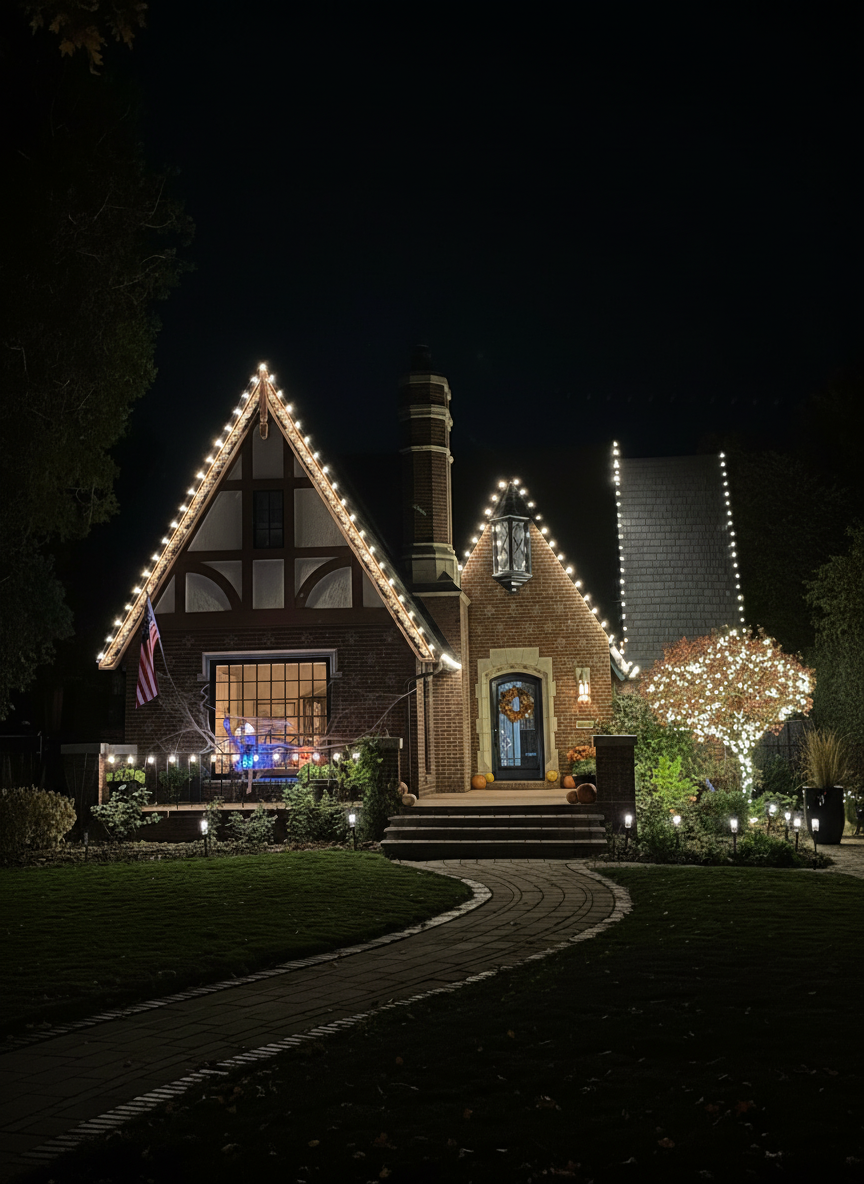
For almost every Colorado Springs property, LED Christmas lights are the better choice: dramatically lower power draw, no filament to shatter in sub-zero cold, almost no heat next to dry pine and wood shake, and consistent color across a long roofline. Incandescent strands still have one advantage — that specific soft amber glow some homeowners love — and modern warm-white LEDs have closed most of that gap.
| Factor | LED | Incandescent |
|---|---|---|
| Energy use per strand | Roughly 80–90% less power | High draw; limits strands per circuit |
| Strands per circuit | Many runs can be linked safely | Few runs before you risk a breaker |
| Cold-weather behavior | Unaffected by sub-zero temps | Filaments are fragile when cold |
| Heat output | Cool to the touch | Warm bulbs near dry pine needles |
| Typical lifespan | Multiple seasons with proper storage | Often one to two seasons |
| Color consistency | Uniform across long rooflines | Noticeable variation between strands |
| Look | Crisp warm white or saturated color | Classic soft amber glow |
Why Cold Matters More Here Than Most Places
Colorado Springs displays live outside through six weeks of wind, snow load and 40-degree daily temperature swings. Incandescent bulbs rely on a thin filament that becomes brittle in deep cold, so a windy night can take out several bulbs at once — and on a series strand, that means a dark section. LEDs have no filament, so cold snaps and gusts don't cause the same mid-season failures. On homes near Monument and the Tri-Lakes area, where 60+ mph gusts are routine, that difference shows up every single season.
Circuit Capacity: The Practical Deciding Factor
Incandescent strands draw so much current that you can only link a few before you're at the limit of a household circuit. That's why DIY displays end up with extension cords running to four different outlets and a breaker that trips every time the garage heater kicks on. LEDs let us run long continuous lines with far fewer power drops — cleaner installation, fewer visible cords, no electrical upgrade.
Heat, Roofs and Trees
Warm bulbs sitting against dry Ponderosa needles or wood shake is a risk we simply avoid. Cool-running LEDs are the right call for wooded properties in Black Forest and mountain homes in Woodland Park, and for the historic structures we light in Manitou Springs.
Getting the Classic Look With LED
If you want traditional warmth, ask for warm white in the 2400K–2700K range rather than a cool 5000K product. Choose a bulb shape that matches the architecture — C9 for bold traditional rooflines, C7 or mini for finer detail, and faceted bulbs when you want sparkle from the street. We spec all of it during design so the display matches your home rather than a catalog page.
What This Means for Your Quote
LED product costs more per foot up front, but our pricing guide covers product, install, service, takedown and storage in one seasonal number — and because LED product survives multiple seasons, returning customers usually pay less in year two. Businesses comparing product should also see our commercial lighting page, and anyone tired of seasonal installs should look at permanent trim lighting.
Where to Go From Here
Once you've settled on product, the next question is budget — seewhat Christmas light installation costs in Colorado Springsfor real price ranges by home size. If you want dimming, scheduling and color scenes rather than fixed strands, look atpermanent holiday and trim lighting. For retail centers, restaurants and property managers, ourcommercial Christmas light installation program covers design through storage, and homeowners canbook Christmas light installation in Colorado Springs directly.